
Waterborne Pathogens and Bronchiectasis: Practical Shower Tips
In this video, I show exactly how I treat the showerhead while staying in a rental condo—a practical tip that some of you may find helpful for travel or even as a long-term solution at home.
How I Stay Safe from Waterborne Pathogens, Even in a Rental Shower
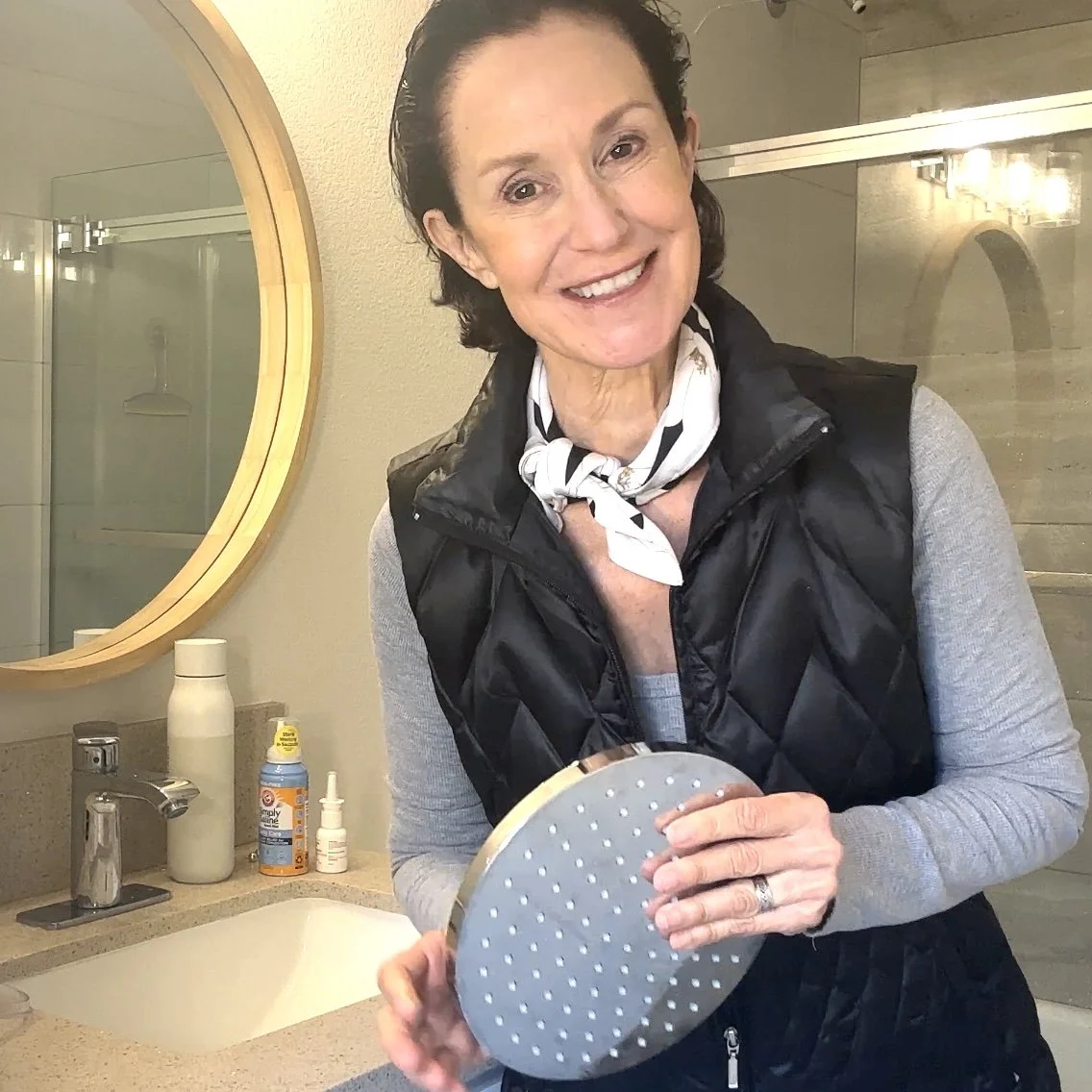
These precautions may not be necessary for everyone, and they are always best discussed with your healthcare provider. That said, if you have ever been told, “You can’t really avoid waterborne exposure,” or “There’s nothing you can do in a rental,” I invite you to see for yourself and decide what feels right for you.
Why This Matters: Insights from Dr. Joseph Falkinham on Shower Safety
Dr. Joseph Falkinham is an environmental microbiologist and one of the leading researchers studying nontuberculous mycobacteria, including Mycobacterium avium complex (MAC). His work has shown how these bacteria thrive in household water systems and why shower exposure matters, especially for people with underlying lung conditions such as bronchiectasis.
Research has demonstrated that NTM bacteria commonly live in biofilms inside household plumbing, particularly in showerheads. When the shower is turned on, these biofilms can release aerosolized droplets that may be inhaled directly into the lungs. Plastic showerheads tend to harbor more biofilm than metal ones, and water temperatures below 125°F can create an environment where MAC bacteria survive and multiply. These organisms are also resistant to standard municipal water treatment methods.
Dr. Falkinham has emphasized that NTM are opportunistic pathogens and that for people with vulnerable lungs, reducing aerosolized exposure from contaminated water sources is an important consideration.
What You Can Do in a Rental
Even in a rental property, there are practical steps you can take to reduce potential exposure. These may include removing the showerhead, treating it with disinfectant, running hot water and taking short showers. Before entering the shower, keep a window open and the fan on, and redirect the spray to minimize aerosol exposure. These small actions can offer an added layer of protection without making permanent changes.
Supporting the BE CLEAR with Bronchiectasis YouTube Channel
I have created more than 250 free educational videos on the BE CLEAR with Bronchiectasis YouTube channel to make accurate, practical information available to people living with bronchiectasis around the world. One of the strengths of YouTube is its built-in translation tools, which allow this content to reach viewers in multiple languages.
Every view, share, and subscription helps the channel grow. My current goal is to reach 4,000 total watch hours so I can begin earning from the platform and reinvest that support into creating even more educational content.
You can help by subscribing to the channel, liking and sharing videos you find helpful, commenting with questions or topic requests, or even letting videos play in the background while you go about your day.
Staying safe does not have to be complicated, but it does require intention. With a bit of preparation and guidance grounded in research, it is possible to take small steps that make a meaningful difference, whether you are at home or traveling. My hope is that this information feels actionable, empowering, and supportive as you navigate daily life with bronchiectasis.
