
Postural Drainage and Bronchiectasis
Are You Using Gravity to Help Clear Your Airways?
Are you familiar with postural drainage? It refers to positioning your body so that gravity can help move mucus from the smaller airways toward the larger, central airways, where it may be easier to cough or huff out. The Bronchiectasis and NTM Association includes postural drainage among the airway clearance techniques that can help prevent mucus from pooling in the lungs.
For those of us living with bronchiectasis, it can be another useful tool to incorporate into our airway clearance routine. Think about what happens when you nebulize saline. The saline helps hydrate and loosen mucus, making it easier to mobilize. Once that mucus is loosened, gravity may be able to help move it.
You may have experienced this without even realizing it. If you tend to start coughing when you lie down at night, the change in position may cause mucus to move toward your central airways, triggering a cough. Postural drainage intentionally applies that same principle during airway clearance.
Different positions can be used to encourage drainage from different areas of the lungs. For example, the right middle lobe is a common area of bronchiectasis. Positioning yourself partly on your back and toward your left side may help encourage mucus to move from the right middle lobe toward the larger airways, where you can more easily clear it. Raising your right arm may also help open that side of the chest.
I receive my care at NYU Langone’s Bronchiectasis & NTM Program, and a respiratory therapist there suggested that I use my Aerobika® OPEP device in different postural drainage positions. I liked the idea because it allowed me to combine techniques rather than thinking of postural drainage as an entirely separate part of my airway clearance routine.
I now use my Aerobika in different postural drainage positions and follow it by listening to a short recording on the Autogenic Drainage app. Autogenic drainage uses controlled breathing at different lung volumes to help mobilize mucus. I find that combining these techniques gives me several different ways to help move mucus during the same airway clearance session.
Depending on where your bronchiectasis is located, a respiratory therapist or other clinician familiar with airway clearance can help you determine which positions and techniques may be most useful for you. The European Respiratory Society bronchiectasis guidelines recommend teaching people with bronchiectasis airway clearance techniques and emphasize that airway clearance should be personalized.
What About Reflux?
Of course, postural drainage requires some additional thought if you have GERD, reflux or concerns about aspiration. Traditional postural drainage sometimes involves positioning the head below the hips, which may not be appropriate for someone prone to reflux, particularly after eating.
Fortunately, postural drainage doesn’t have to mean dramatically tipping yourself toward the floor. Positions can be modified, and timing matters. Doing airway clearance away from meals and using positions that don’t require a steep head-down angle may be more appropriate for some people.
If reflux or aspiration is a concern, talk with your respiratory therapist, pulmonologist or physical therapist about positions that are appropriate for you.
Postural Drainage Made a Difference for Me
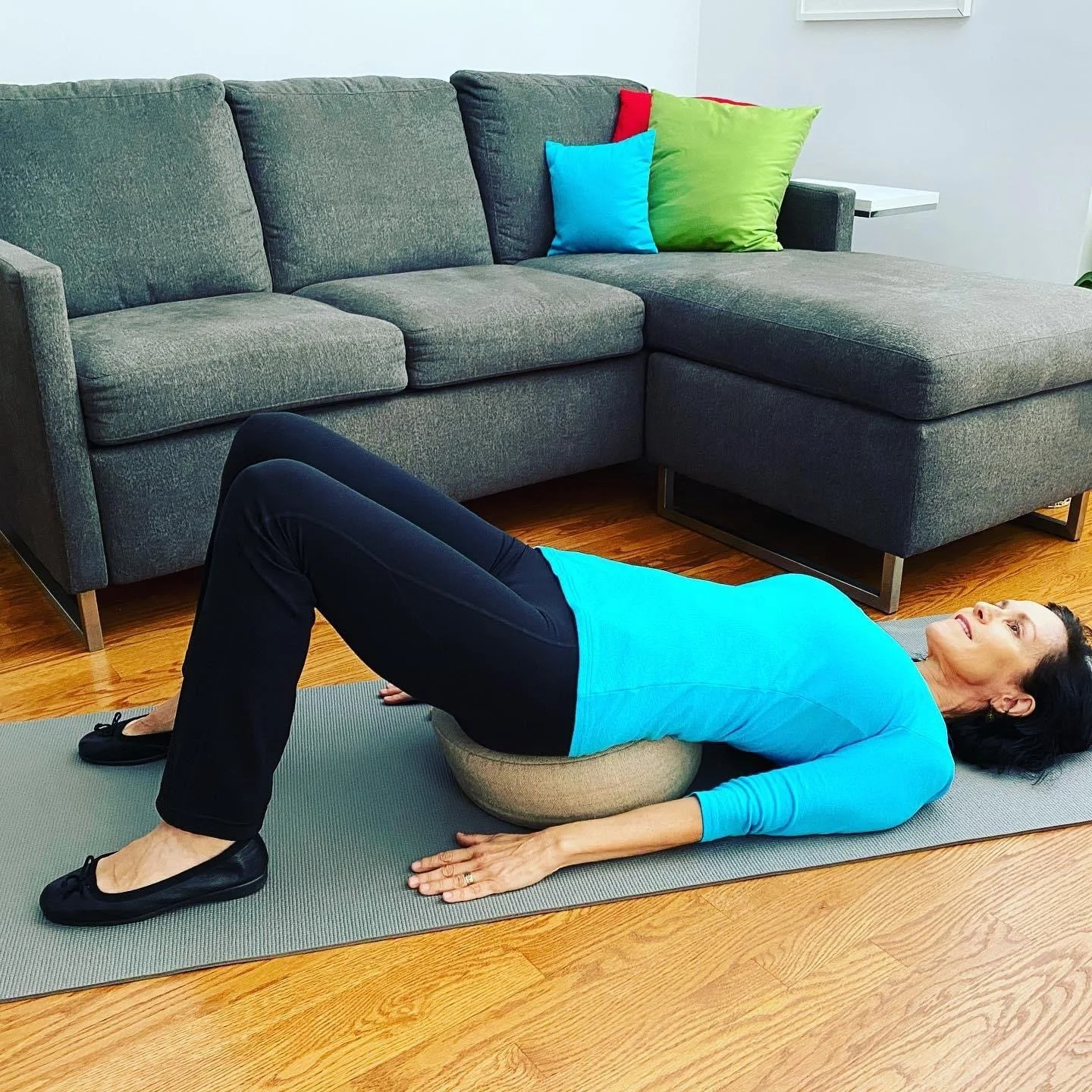
After a year and a half of not being able to get sputum out, I found that postural drainage was the key for me. My favorite position is the one I’m demonstrating in this photo.
That’s one of the things I’ve learned about airway clearance over the years. It isn’t necessarily about finding one technique that does everything. Sometimes it’s about combining different tools and techniques and figuring out what helps you move mucus most effectively.
For me, using my Aerobika in different positions, following it with autogenic drainage, and adding gravity to the equation made a tremendous difference.
All bronchiectasis guidelines recommend that airway clearance techniques be taught by a respiratory professional. What I do for my airway clearance may not be appropriate for you. We each have different areas of our lungs affected, different amounts and types of mucus, and other health considerations, such as reflux, that may influence which techniques and positions are best for us.
I share what works for me in the hope that it gives you ideas to discuss with your own respiratory therapist or healthcare team. Airway clearance should always be individualized to you.
