

Treating and Managing Bronchiectasis
In this section, I’ll walk you through key treatments that can help improve your quality of life and protect your lungs over the long term. We’ll focus on daily airway clearance routines and the role of exercise, movement, and pulmonary rehabilitation.
Bronchiectasis can feel all-consuming at first, but for many, it can be a manageable condition. With the right treatment plan, we can often reduce symptoms, decrease flare-ups, and live full, active lives.
Treating and Managing Bronchiectasis: Index
Airway Clearance Treatments | Airway Clearance Therapies | Drainage Techniques | Finding Which Clearance Works |Exercise| Posture, Balance & Fall Prevention | Breathwork Techniques | Pulmonary Rehab | Common Questions | Key Points
Airway Clearance: The Foundation of Treatment


Clearing mucus from the airways is essential for preventing infection, reducing inflammation, and preserving lung function in bronchiectasis. When mucus accumulates, it becomes a sticky reservoir for bacteria and other pathogens, fueling inflammation and accelerating airway damage.
Daily airway clearance isn’t just a recommendation; it’s the cornerstone of effective treatment. Practiced consistently, it helps minimize exacerbations, reduce coughing, and improve breathing. Even when symptoms are mild or you’re not noticeably symptomatic, clearing your lungs daily can help prevent future flare-ups.
North American bronchiectasis guidelines were developed in 2025 and can now be considered alongside guidance from other regions, including the United Kingdom, Europe, and Australia. These guidelines emphasize that airway clearance techniques, often called chest physiotherapy or simply “physio” outside the US, should ideally be taught and periodically reviewed by trained respiratory professionals to help ensure they remain effective and tailored to each person’s needs.
Nonetheless, access to respiratory therapists can be limited in the United States, often because insurance plans do not cover educational services. For some people, the only opportunity to work with a respiratory therapist may be through a hospital-affiliated bronchiectasis center. Similar access challenges exist in many countries around the world.
Respiratory therapists and physiotherapists can help you:
Identify the best techniques for your symptoms
Adapt your routine as your condition changes
Learn correct form and pacing
Troubleshoot challenges and maintain consistency

Common Airway Clearance Therapies
Airway clearance devices are widely available in the U.S., but access may vary globally. What ends up in your "Airway Clearance Toolkit" may depend on where you live, insurance coverage, and personal needs.
Oscillatory PEP devices:
Devices such as the Aerobika® and Acapella® combine Positive Expiratory Pressure (PEP), which is similar to blowing into a balloon, with gentle vibrations that help loosen mucus and move it upward.
Nebulized saline or hypertonic saline:
These inhaled solutions thin mucus and hydrate the airways. Some bronchiectasis experts suggest that hypertonic saline may help inhibit bacterial growth. Nebulizer compressor systems, such as the Ombra® and AeroEclipse® XL nebulizing cups by Monaghan Medical, can help deliver saline and other inhaled medications effectively and efficiently.
HFCWO vests:
High-frequency chest wall oscillation (vest therapy) can be especially helpful for people with thick mucus, frequent infections, or limited mobility. The vest gently compresses and releases the chest to loosen mucus and improve lung function.
Cleaning and Sterilizing Your Devices
If you use an OPEP device or nebulizer, regular cleaning and sterilization are critical to prevent bacterial growth and reduce the risk of infection or reinfection. Familiarize yourself with the best cleaning practices for both home and travel. I’ve shared cleaning and sterilizing tutorials on the BE CLEAR YouTube channel, and most device manufacturers also offer step-by-step instructions.
Airway clearance is not one-size-fits-all, but with the right tools and support, it can become a sustainable and empowering part of your daily routine.
In the U.S., airway clearance devices and medications, such as the Aerobika or the Ombra® nebulizing system, which transforms saline solution into an inhalable mist, require a prescription. Talk to your primary care provider or pulmonologist to see if you might try these devices. As always, it's important to use them under medical supervision.
For a deeper dive into all things airway clearance, visit the BE CLEAR with Bronchiectasis YouTube channel, where you’ll find a dedicated playlist featuring best practices, tips, and demonstrations to help support your daily routine.
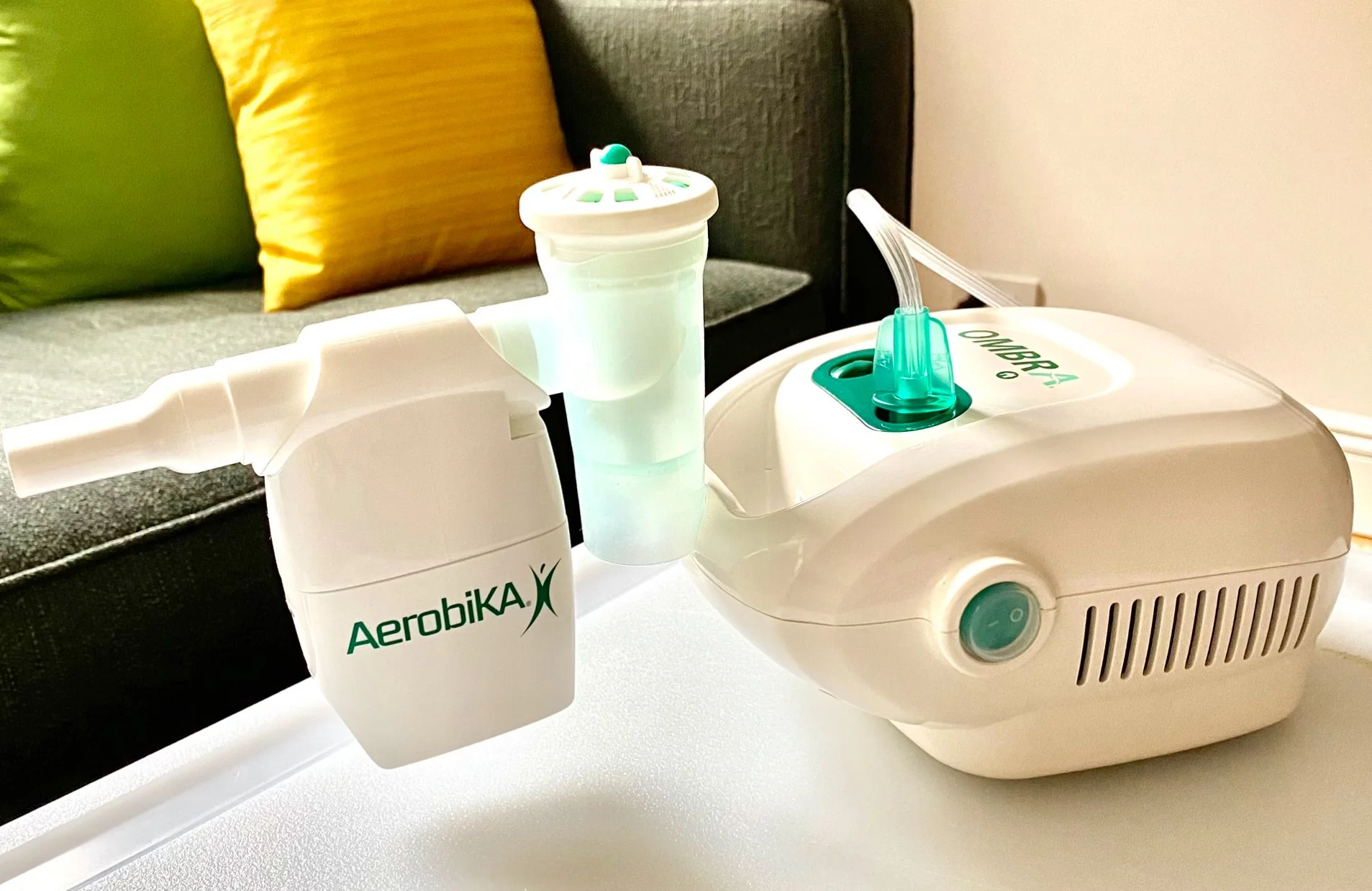
The AEROBIKA® and AEROECLIPSE® XL R BAN® Nebulizer with OMBRA®
Breathing and Postural Drainage Techniques to Support Airway Clearance
In addition to devices, specific breathing techniques can enhance airway clearance by mobilizing mucus and improving oxygen exchange. These techniques can be used alongside devices or on their own, making them especially valuable when there is limited access to equipment.
Huff Coughing:
A gentle, controlled exhale (like fogging a mirror) that helps move mucus from smaller to larger airways to be coughed out and swallowed.
Autogenic Drainage:
A structured method using low, medium, and high lung volumes to move mucus gradually up through the airways. This technique can be tricky to master but fortunately, there is a smartphone app called Autogenic Drainage that many use to guide their breathing.
Active Cycle of Breathing Techniques (ACBT):
A sequence of relaxed breathing, deep breaths, and huffing designed to clear mucus while minimizing breathlessness.
Postural Drainage and Manual Techniques:
Strategic positioning, sometimes combined with percussion, drains mucus from specific lung areas. While common in cystic fibrosis care, some bronchiectasis centers caution against it for those diagnosed with reflux. However, if tolerated well, postural drainage can be an effective technique, especially when combined with other methods such as the Aerobika and breathing techniques.
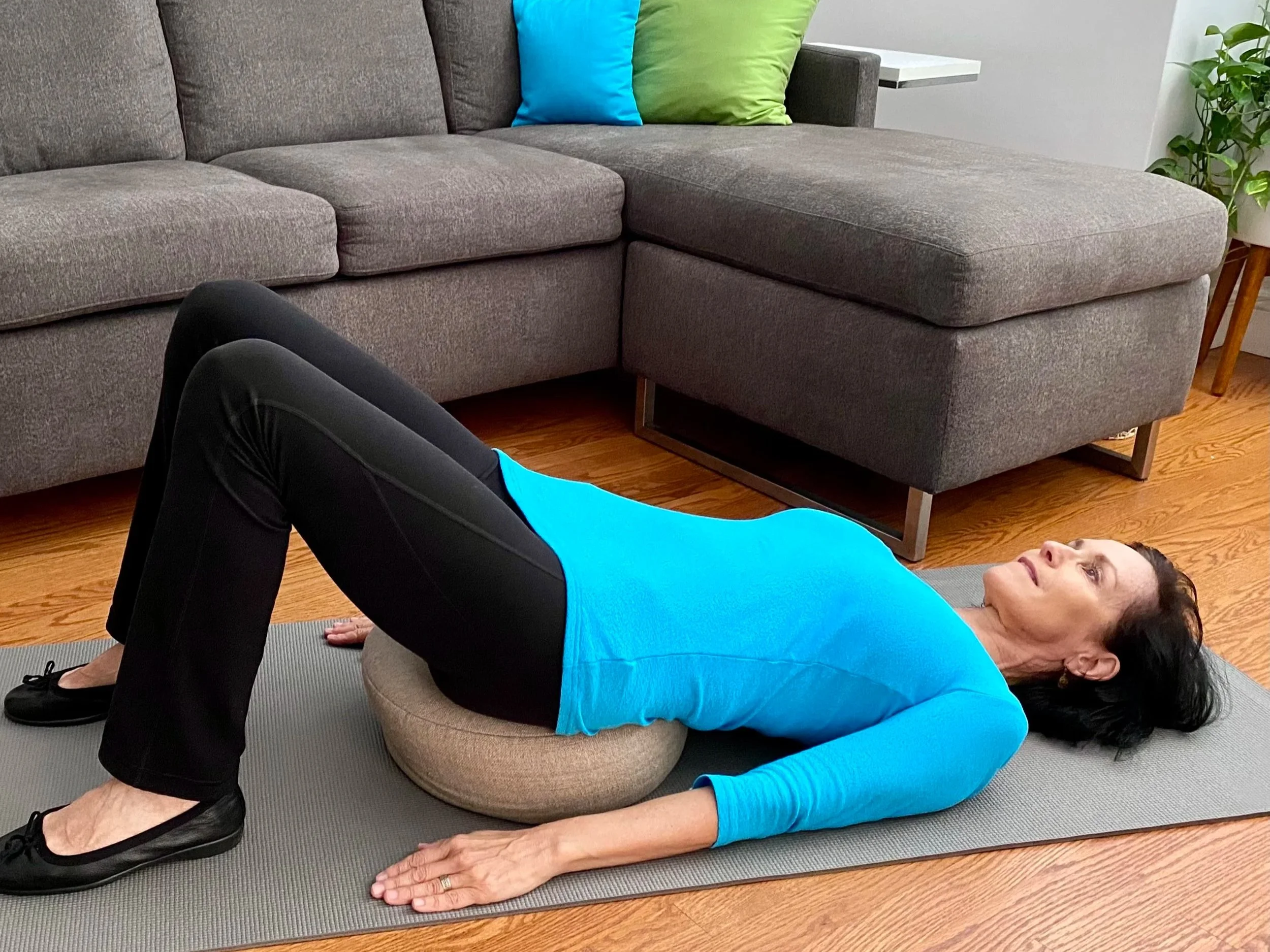
Personal Story: Finding What Airway Clearance Works
For the first 18 months after my bronchiectasis diagnosis, I couldn’t bring up sputum during my daily airway clearance session, no matter how hard I tried. Then I had an a-ha moment. On a typical day, around 2 pm, I would sit up in bed to read and, hopefully, take a nap. Without fail, I would start to cough, not violently but enough to notice. I could hear mucus rattling in my upper lungs, and I often even managed to cough some of it up.
I realized that my position, with my head propped up on pillows, matched a postural drainage position. I had avoided postural drainage out of concern that it might cause reflux. But testing showed that while I refluxed like most people, it wasn’t a serious issue.
I needed to experiment more intentionally with the various postural drainage positions. After trial and error, I settled on a position as shown in the photo above. When I am finished with my airway clearance treatment, I ease into this position and, while breathing deeply, let my body do the rest. The Autogenic Drainage app is an excellent breathing guide that I enjoy using while in that position.
Effective airway clearance doesn’t always require force. It can be gentle, consistent, and tailored to your body. Sometimes, the key is making space, literally and figuratively, for your body to let go.
How to Know if Your Routine is Effective and Right for You
Do you still find yourself coughing up significant amounts of mucus after you finish your airway clearance session? If so, it may be worth trying additional techniques or extending your session slightly to help clear your lungs more thoroughly.
Do you feel clearer after your routine?
Is your technique sustainable?
A perfect technique that’s rarely used won’t help your lungs.
Find what works for you and commit to it. That’s the goal.

Exercise for Bronchiectasis: Why Movement Matters
Exercise can feel daunting when you're fatigued or short of breath, but it’s one of the most powerful ways we have to support lung health.
Benefits of Regular Exercise:
Strengthens respiratory and skeletal muscles
Improves oxygen circulation
Reduces shortness of breath
Boosts energy and mood

Making Exercise Work for You: “Exercise Snacking”
On the BE CLEAR with Bronchiectasis Facebook and Instagram pages, I often share the concept of exercise snacking: short 5–10-minute bursts of movement spaced throughout the day. These mini-sessions offer a realistic, sustainable alternative to traditional 45-60-minute workouts. They help keep your body active, allow your lungs to expand regularly, and support both mucus clearance and circulation.
Does the word “exercise” turn you off? Then, let’s just call it what it is: movement. On the BE CLEAR YouTube Channel, you’ll find an Exercise Playlist filled with approachable, fun ways to move your body. These routines are designed for all levels and energy patterns because progress doesn’t look the same for everyone.

Exercise as a Natural Bronchodilator
Did you know that exercise acts as a natural bronchodilator? Movement helps open the airways, promotes deeper breathing, and supports more effective mucus clearance.
Some people find that exercising before airway clearance warms up their lungs and makes devices or coughing techniques more effective. Others prefer to clear their lungs first, so they can breathe more comfortably during activity.
There’s no one “right” sequence; what matters is finding what works best for your body.
Just as the causes and symptoms of bronchiectasis vary, so should your self-care approach. Your exercise and clearance routine should reflect your energy levels, symptoms, and daily rhythms and it may need to shift over time.
Many of us have other conditions such as arthritis, osteopenia or osteoporosis, and GERD, which may require thoughtful modifications to ensure safety and comfort. With this in mind, it’s important to develop a plan that integrates movement and airway clearance in a way that’s both sustainable and realistic for your body, energy levels, and lifestyle.
Posture, Balance & Fall Prevention
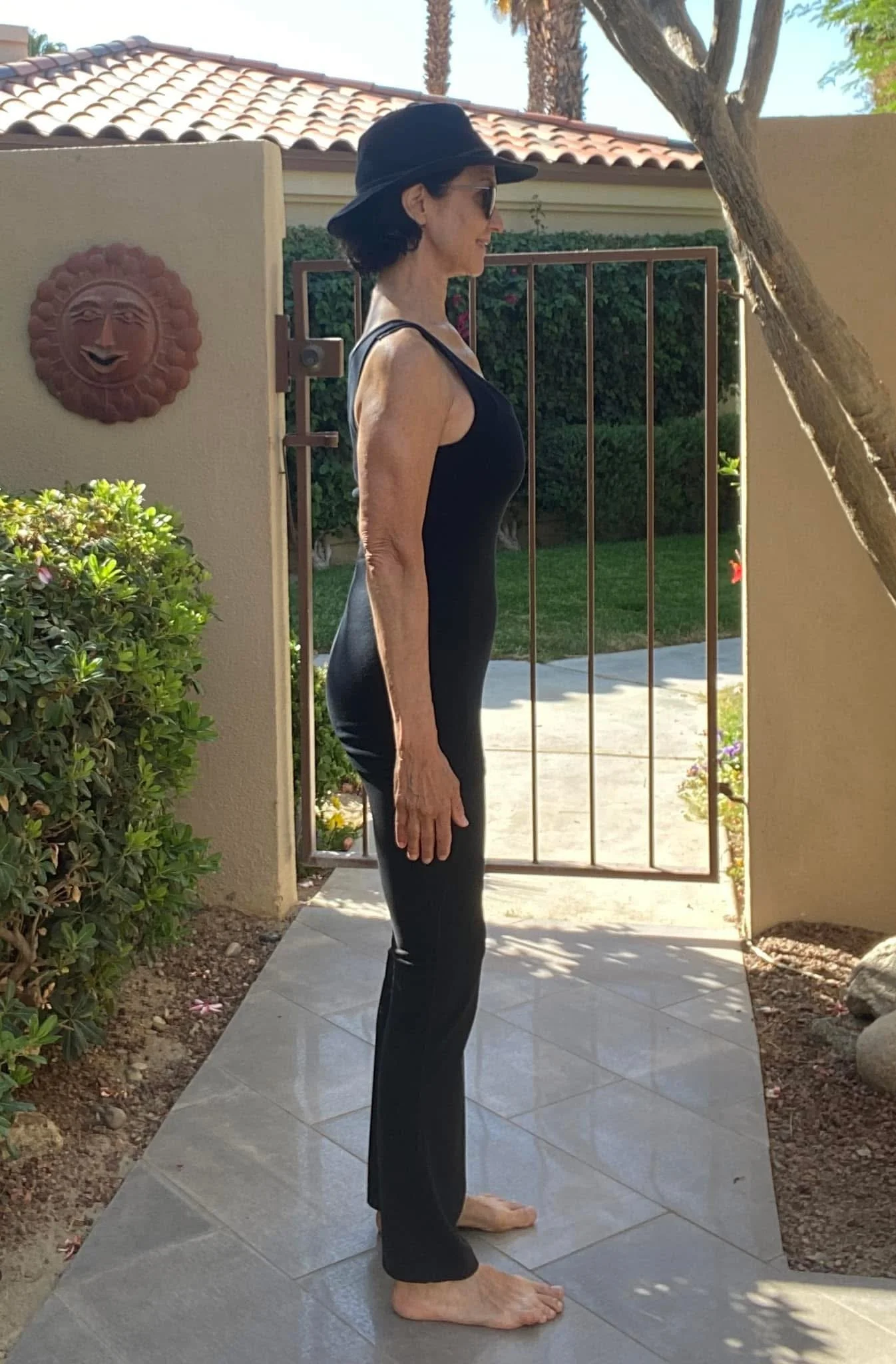
If you’ve followed BE CLEAR on social media over the years, you know how much I emphasize posture and balance, and for good reason. These often-overlooked elements are essential for breathing well and moving safely.
Chronic coughing, aging, and time spent in forward-leaning positions during airway clearance can contribute to kyphosis, a rounded upper back that restricts lung expansion. Poor posture not only impacts breathing but also increases the risk of falls.
When combined with reduced balance and core strength, it can set the stage for injury and, in the worst cases, fractures.
That’s why in my programs and videos, I focus on core stability, flexibility, and upright posture, foundational principles that support easier breathing and safer, more confident movement.
When we stand at our straightest, we don’t just breathe better; we feel more confident, and we’re perceived that way by others, too. Good posture can become a kind of self-fulfilling prophecy: the more you practice it, the more poised and capable you feel, and the more others respond to you in kind.
Stretching helps improve posture, increase flexibility, release tension, and support more efficient breathing. I often recommend gentle yoga for its ability to unite breath, movement, and mindfulness, a powerful trio that can also ease anxiety and support lung function.
If you have reflux or osteoporosis, be sure to modify your practice and consult your care team about what’s safe for you.
Breathwork techniques to support your routine:
Diaphragmatic breathing—Also known as Belly Breathing—engages your core and promotes fuller lung expansion
Pursed-lip breathing—Slows your breathing and improves oxygen exchange
Coordinated breathing—Syncs breath with movement to reduce fatigue, as featured in my book, The BE CLEAR Method to Living with Bronchiectasis
These techniques aren’t just helpful during exercise; they’re also valuable anytime you’re short of breath or feeling anxious.
Pulmonary Rehab: A Targeted Approach
Pulmonary rehabilitation is a structured, medically supervised program designed to help people with chronic lung conditions improve their breathing, strength, and overall well-being.
For individuals with bronchiectasis, it can be a transformative tool, especially when paired with consistent airway clearance and a personalized movement routine.
Most programs include:
Supervised aerobic and strength training
Education on bronchiectasis, breathing strategies, and symptom management
Airway clearance support
Emotional and peer support through group discussions or counseling
Programs vary by location. Some offer additional services such as:
Nutritional counseling to support energy levels, weight management and nutritionally-dense eating
Smoking cessation programs for those looking to quit or reduce exposure
Stress management and mindfulness education to support mental health and coping skills
Pulmonary rehab may be delivered in person, virtually, or through hybrid options, making it more accessible for many. However, in the U.S., insurance reimbursement limitations can restrict availability, and some programs may not be offered locally or may have long waitlists.
Still, it’s worth asking your pulmonologist about centers in your area or through hospital systems or telehealth networks. Even a few sessions can help you build a safe, sustainable exercise and breathing routine tailored to your needs.
Common Questions
-
Yes. Even without mucus production, clearance helps break up biofilm and reduce inflammation.
-
Most people with bronchiectasis benefit from doing airway clearance at least once daily. Your frequency may increase during flare-ups or based on your doctor’s guidance.
-
Exercise snacking means short bursts of activity throughout the day. It’s ideal for people managing fatigue or shortness of breath and still provides powerful benefits.
-
Follow manufacturer guidelines and check out BE CLEAR YouTube tutorials. Regular cleaning helps prevent infection and ensures device effectiveness.

Key Points to Remember
Effective bronchiectasis management starts with consistency, not perfection. Whether you’re learning a new breathing technique or building a 10-minute movement routine, each small action supports your lungs.