
Should you finish nebulizing before you pick up your Aerobika, or use both at the same time? I do it both ways, and for me, the deciding factor is usually time. Here’s what each setup looks like, what the specialists I’ve learned from recommend, and the question I’d bring to a respiratory therapist before deciding what’s right for you.
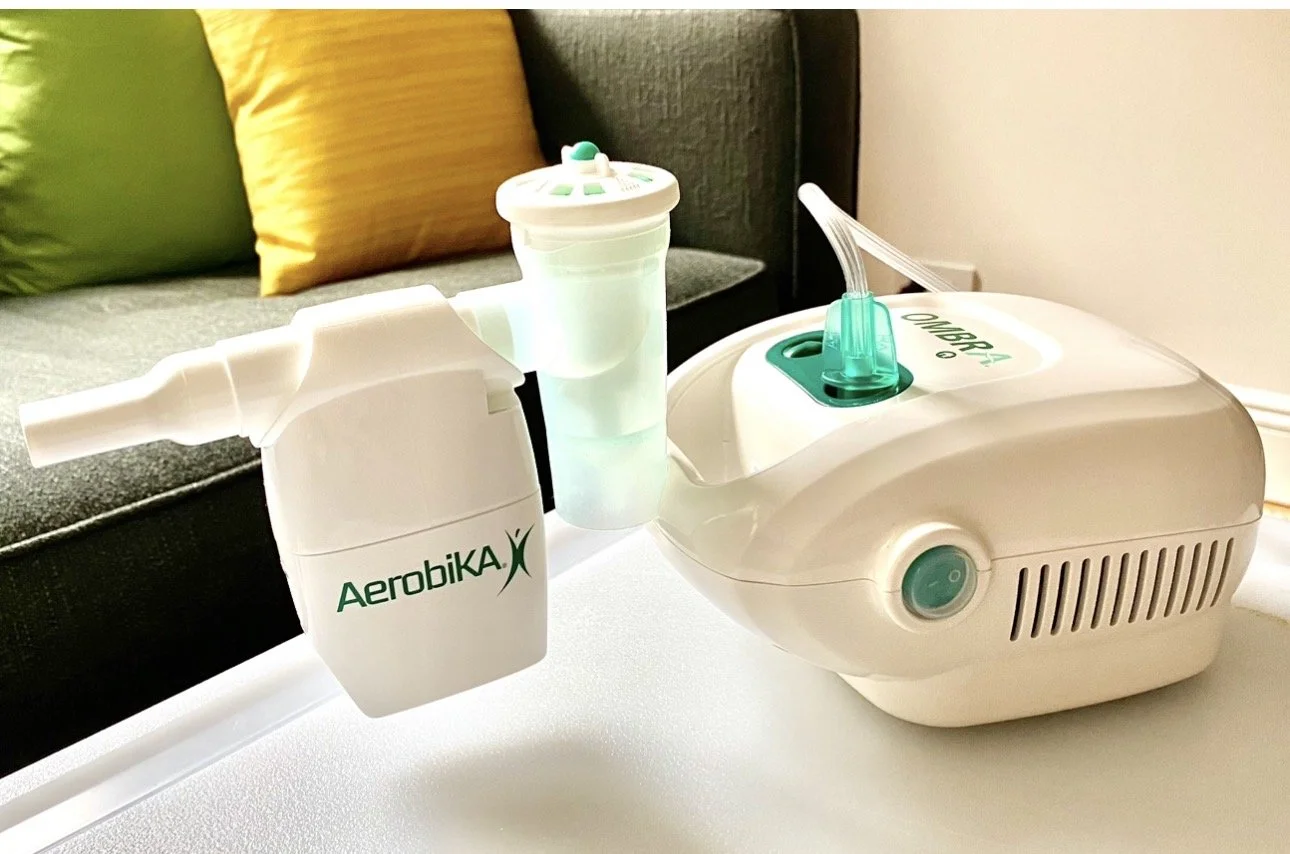
Airway clearance is highly individualized and, in many ways, as much an art as it is a science.
At every professional bronchiectasis conference I have attended, the message has been consistent. Trained respiratory professionals should teach airway clearance and tailor it to each individual. Unfortunately, many people still lack access to this level of specialized education. While progress is being made, we are not there yet.
In the meantime, peer education, patient communities, and webinars have become essential resources for sharing practical airway clearance strategies.
Different Airway Clearance Approaches
One topic that often comes up in these discussions is using devices such as the Ombra compressor with AeroEclipse nebulizer cups.
One advantage of this system is that the nebulizer cup can connect directly to an Aerobika OPEP (Oscillating Positive Expiratory Pressure) device. National Jewish Health in Denver, Colorado, a leading lung hospital, teaches this combined approach.
With this method, patients inhale medicated mist and exhale into the Aerobika. The vibrations created during exhalation are thought to help the saline mist reach deeper into the airways.
Other specialists, including Dr. Pamela McShane, recommend a different sequence. In this approach, patients nebulize first to coat the airways with saline, then use airway-clearing tools such as the Aerobika, vibration vests, or specific breathing techniques to help mobilize mucus.
Devices are only part of the picture. Many people also use breathing techniques that require no equipment, such as the active cycle of breathing technique (ACBT), autogenic drainage, and huffing. Others add postural drainage, using gravity to help mucus move from different areas of the lungs. Some people rely on one method, while others combine several depending on how they feel that day.
How I Decide: Nebulize First or Use Both Together?
The honest answer is that it depends.
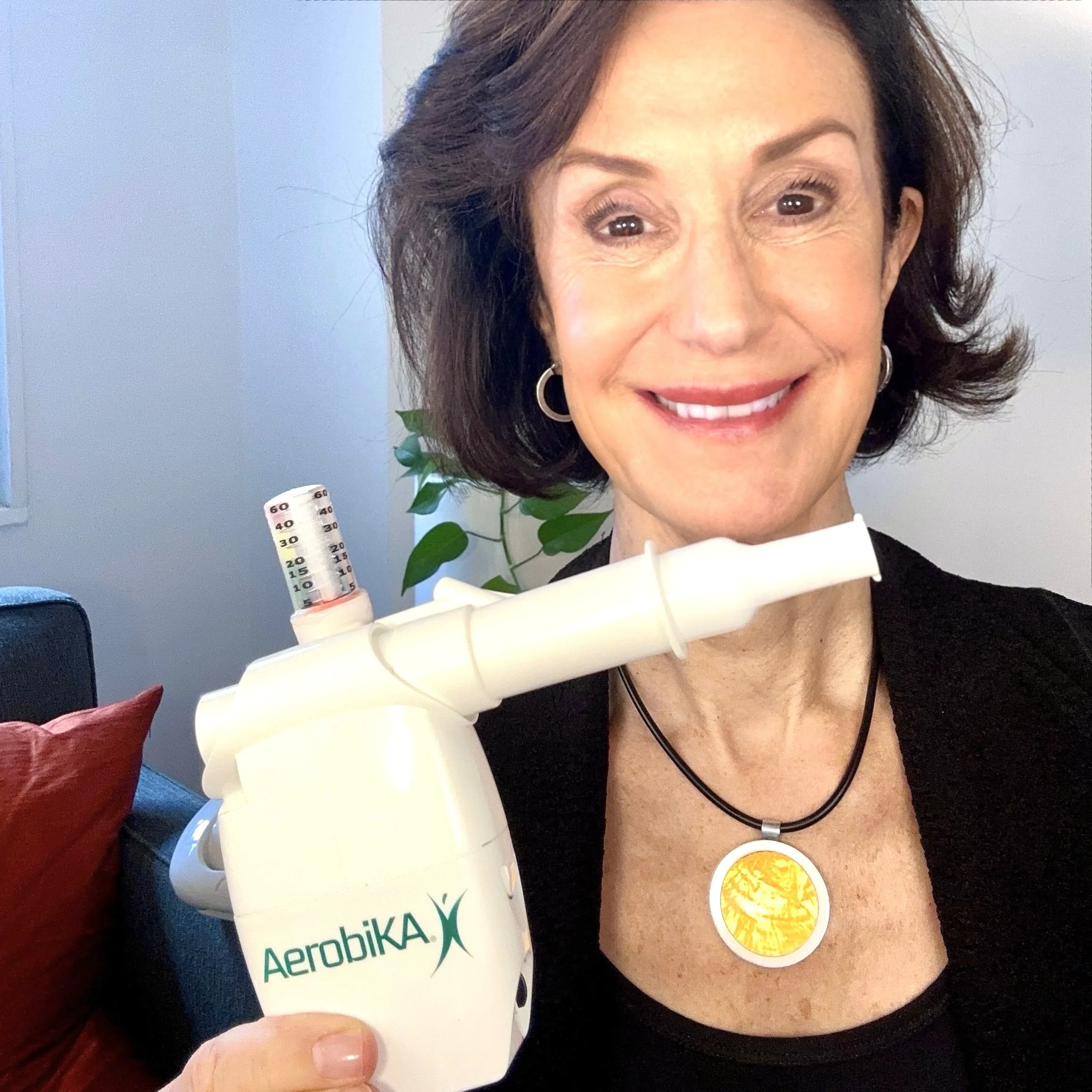
If I have plenty of time, I usually nebulize first, then clear the airway. If I am short on time, I may attach the nebulizer cup directly to my Aerobika to streamline the process.
When I nebulize first, I finish my saline with my Ombra compressor and AeroEclipse nebulizer cup, then switch to my Aerobika for the rest of the session. This is the sequence Dr. Pamela McShane recommended, and it’s the one I choose when I have time.
When I use both together, I attach my AeroEclipse cup to my Aerobika, breathe in the saline mist, and breathe out through the Aerobika. For me, it’s a way to fit both parts of my routine into the time I have.
What works best can also change over time. During a flare-up, I may need more frequent or longer sessions. When traveling, I choose portable equipment that's easy to clean. On low-energy days, a simpler routine that I actually complete is better than an ideal routine I skip. Your mucus production, energy level, schedule, insurance coverage, and your medical team’s recommendations all play a role.
Both approaches can be effective. The key is choosing a method that works for your body, your lungs, and your daily life.
What to Ask Your Respiratory Therapist
If you can meet with a respiratory therapist, bring your nebulizer and Aerobika and ask, “Should I finish nebulizing before I use my Aerobika, or would using them together make sense for me?” If they recommend using them together, ask them to show you how and watch you try it.
Important Airway Clearance Tips
Airway clearance is not one-size-fits-all. Comparing yourself to others or assuming you are doing something wrong because a particular technique does not work for you can be discouraging and unnecessary.
One important tip experts often emphasize is to avoid exhaling too forcefully or coughing aggressively to push mucus out. Forceful coughing can collapse floppy airways, making clearance more difficult. Instead, aim for slow, steady breathing. Easy does it.
A few other tips I have found helpful:
Try huffing instead of coughing. A huff is a gentle, open-mouthed exhale, like fogging up a mirror, that can help move mucus without straining the airways.
Stay well hydrated. Drinking enough fluids can help keep mucus thinner and easier to clear.
Consistency matters more than perfection. A shorter session done regularly is often more helpful than a long session done once in a while.
Clean and dry your equipment after each use, following the manufacturer’s instructions, to lower the risk of infection.
Revisit your technique from time to time. Ask a respiratory therapist to watch you do your routine; they may notice small changes that make a big difference.
Airway clearance should feel purposeful and sustainable, not punishing. Remember: do not change your current care without first discussing it with your medical team.
(BE CLEAR has a consulting relationship with Monaghan Medical.)
Last reviewed: November 23, 2026
Linda Esposito, MPH, is the founder of BE CLEAR with Bronchiectasis®, an author, patient educator, and advocate living with bronchiectasis. Through her book, educational videos, website, and consultations, she shares research-based insights and practical strategies to help people become more informed and active participants in their care.
Want to Learn More About Bronchiectasis?
The BE CLEAR® Guide to Bronchiectasis is designed to help you understand and manage your chronic lung condition at your own pace. Whether you’re newly diagnosed or looking to strengthen your daily routine, the guide offers expert-informed content, practical suggestions, and compassionate support every step of the way.
