
What is Bronchiectasis?
In this chapter, What is Bronchiectasis, you’ll learn what bronchiectasis is (also known as non-cystic fibrosis bronchiectasis or NCFBE), its common symptoms, underlying causes, how it’s diagnosed, and the latest approaches to treatment and management.
Some sections dive a little deep into the science, because I find it fascinating, and I think you might, too. There's also plenty of practical advice to help make life easier.
What is Bronchiectasis?: Index
How Bronchiectasis Affects Us | Airway Clearance Disruptions | Vicious Cycle | Most at Risk | Common Questions | Key Points
How Bronchiectasis Affects Mucus Clearance & Lung Health

Bronchiectasis — often called BE because it's tricky to pronounce (“bron-kee-EK-tuh-sis”) — is a chronic, progressive lung condition.
Bronchiectasis develops when the bronchi (airways) become permanently widened, thickened, and scarred. This disrupts the lungs’ ability to clear mucus normally and can contribute to ongoing inflammation and repeated infections.
Over time, this irreversible airway damage may lead to symptoms such as chronic cough, mucus buildup, recurrent lung infections, and breathing difficulties.
Adult bronchiectasis is a manageable condition, but it is not currently considered curable.
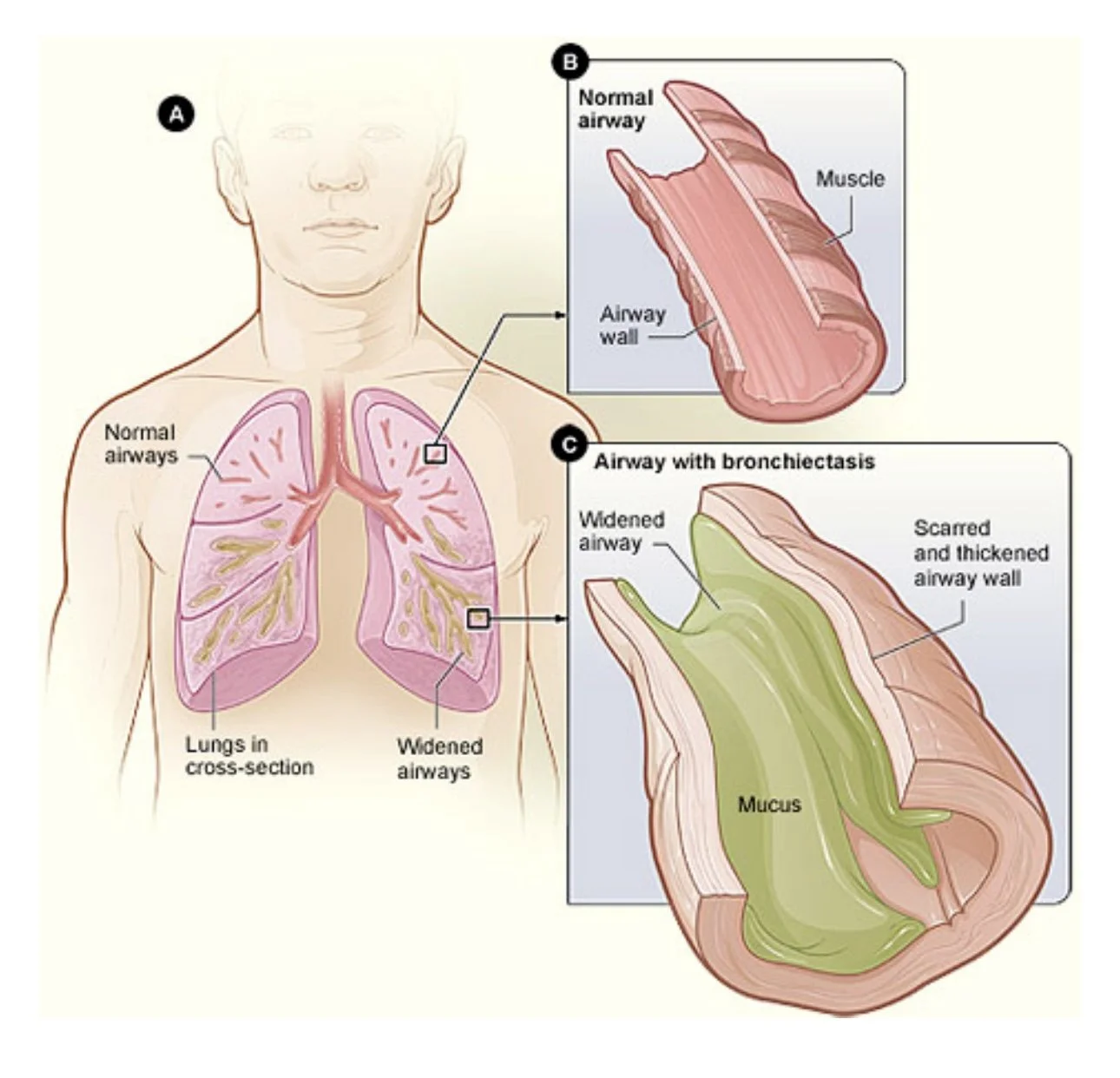
How Bronchiectasis Disrupts Airway Clearance
Healthy lungs use a finely tuned system called mucociliary clearance to keep airways clean. The cilia, tiny hair-like structures, team up with a thin layer of mucus in a highly coordinated system to sweep out mucus and debris. You can think of it as your lungs’ internal housekeeping crew, keeping everything clean and running smoothly.

However, in bronchiectasis:
Cilia are damaged or ineffective
Mucus becomes thick and sticky
Stagnant mucus fosters bacterial growth
Infections trigger inflammation and more airway damage
The Vicious Cycle and Vortex Models
In 1986, P.J. Cole described the Vicious Cycle Model of bronchiectasis.
He showed how:
Impaired clearance leads to mucus buildup
Mucus buildup leads to infection
Infection triggers inflammation
Neutrophilic inflammation causes further airway damage
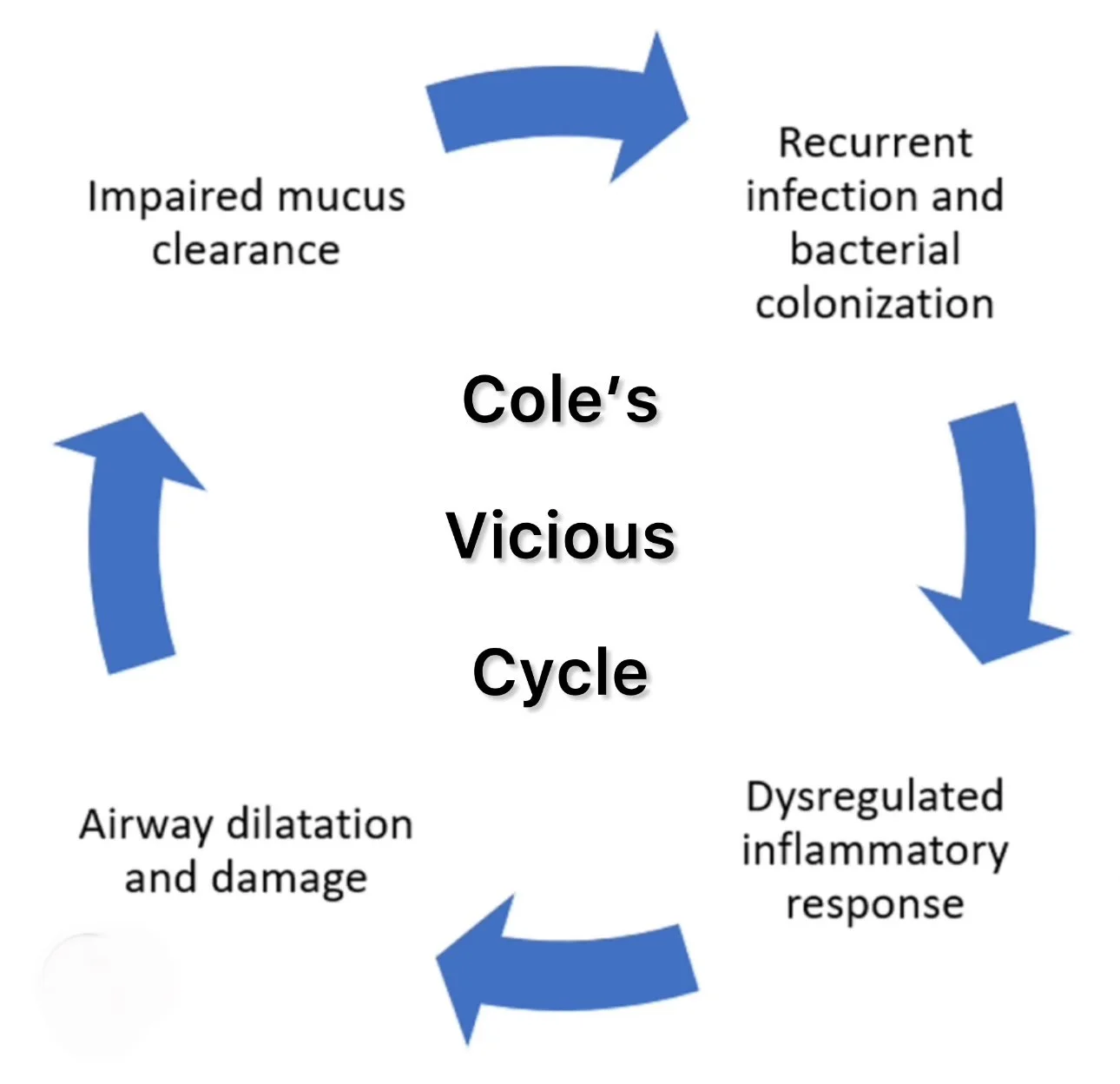
More recently, Dr. Patrick Flume and other bronchiectasis experts described it as a “vortex” to reflect the complex, interconnected nature of these processes and the many factors that may contribute to disease progression.
Who Is Most at Risk?
Bronchiectasis can affect anyone, but certain groups are more commonly diagnosed.
• Women, particularly over age 60
• People with repeated lung infections or underlying lung disease
• People with conditions that affect immunity, mucus clearance, aspiration, or airway inflammation
Why the rise in BE diagnoses?
• Greater access to high-resolution CT (HRCT) scans
• An aging population that is more prone to lung disease
• Improved physician awareness and diagnostic approaches
Understanding bronchiectasis is the first step toward managing it, and I am here to guide you.
Common Questions About Bronchiectasis
-
No. It’s a chronic lung condition caused by underlying health issues—not something that spreads from person to person.
-
Bronchitis is usually a temporary infection, while bronchiectasis involves permanent airway damage.
-
Most people with bronchiectasis live normal lives, especially when the disease is mild and well-managed. It's common for doctors to say, "You will likely die with this disease, not from it." Severe cases involving frequent infections and poor lung function may experience a shortened lifespan, but many live long, fulfilling lives.
Key Points to Remember
Understanding what bronchiectasis is and who it affects is the first step in taking control of your health. Knowledge empowers you to ask better questions, seek appropriate care, and live with more confidence.
And remember, there’s a community here to support you every step of the way.